String corner
(English test version)
Ver 4.3.8.103 E
Copyright CRANE Home Page / All Right Reserved
Makoto Tsuruta
- SINCE 1995 -
Translated by Shige Matsuno
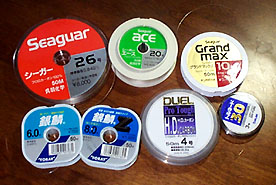
( are they really string of musical instruments or what? )

 Back To
CRANE Top Page
Back To
CRANE Top Page
 "structure
and material of an instrument", "string selection",
and "how you play it"
- proper matching of these three elements is the most important
factor that determines sound of the instrument, in my humble
opinion.
"structure
and material of an instrument", "string selection",
and "how you play it"
- proper matching of these three elements is the most important
factor that determines sound of the instrument, in my humble
opinion.
As you know, it's not an easy task to select
appropriate strings for any stringed instrument. There seems to be no
end once a person became conscious about strings. It's obvious that a
selection affects sound, volume, and sustain of an instrument, but it
also affects playability of the instrument, fatigue of its players,
and even to cause tendinitis to them. A bad selection might cause a
severe damage to the instrument in an extreme case. Yes Virginia, a
string selection is a serious business!
 Chapter 0, Standard pitch
Chapter 1, Before
selecting guitar, lute, or ukulele strings
Chapter 2, Things to
consider in selecting strings
Chapter 3, About gut
strings
Chapter 4.1, How to use a
string slide rule (Pyramid's)
Chapter 4.2, How to use a
string slide rule (Kuerschner's)
Chapter 5, Manufacturers of string and how to contact
them
Chapter 6, Fishing line
gauge
Chapter 7, Some sample
selections
# Sample selections ... for guitar
# Sample selections ... for telz guitar
# Sample
selections ... for lute
# Sample
selections ... for ukulele
# Sample
selections ... for mandolin
Chapter 8, String selection for 19th
century guitars
Before the selection..... Have you changed how you
play, yet?
Sample selections for various scale length ranges are
summarized below. These are the ones I have calculated, many of which
were actually tried on instruments. Sample
A is harder tension one and samples C or D softer. It may be
worthwhile to choose one depending of the bracing scheme of an
instrument. Typical string tension used for the 19th century guitars
seemed to have changed as time and also to depend on the type of
instruments, which is the reason why multiple selections are listed
for a given scale length range. If the exact string gauge calculated
is not available (this often is the case for fluorocarbon strings,
due to limited availability in string gauge), approximated one has
been listed. If you examine these lists with your instrument's scale
length and specification in mind, they would be of great use. By
trying a few, you can come up with an idea on which one is most
suitable for a particular instrument of yours. You got to try!
# 650mm to 640mm
# 630mm to 620mm
# 610mm to 590mm
# 580mm to 570mm
# 560mm to 550mm Terz
Chapter 9, Making gut strings for
dummies
This chapter became an independent section of Crane home
page. Please go back to home page and enter into "Let's make string"
section.
Appendix A, About metal string
Appendix B, Units, names, etc.
Back To
CRANE Top Page